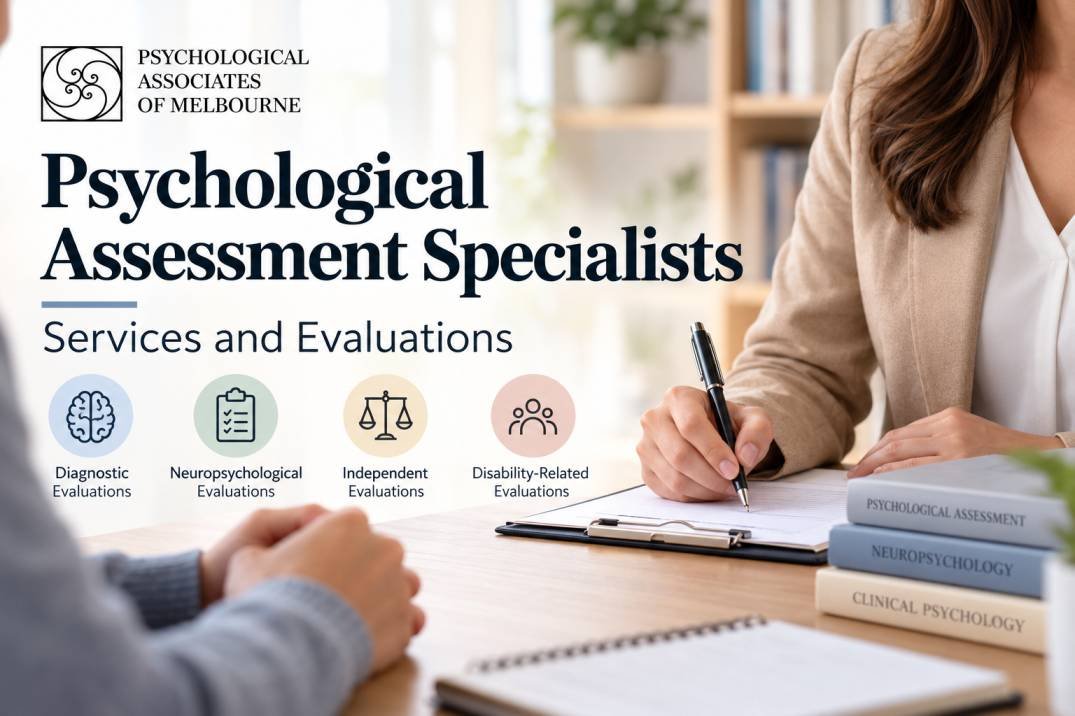
Psychological assessment specialists conduct structured evaluations to help clarify questions about a person’s psychological, cognitive, emotional, and behavioral functioning. Depending on the reason for the assessment, the process may include clinical interviews, standardized psychological tests, a review of relevant records, and a written report. Psychological Associates of Melbourne, based in Melbourne, Florida, provides psychological, neuropsychological, forensic, and diagnostic evaluation services for individuals with different assessment needs.
Choosing the right psychological assessment specialist starts with understanding what you need the evaluation to establish. A diagnostic assessment, an independent psychological evaluation, and a disability-related evaluation may require different methods, documentation, and reporting. Knowing the purpose of your assessment helps you identify the appropriate service and prepare for the process.
What Is a Psychological Assessment?
A psychological assessment is a structured process used to understand a person’s psychological functioning and address a specific clinical, diagnostic, or evaluative question. It brings together relevant information rather than relying on a single test score or questionnaire.
Depending on the assessment’s purpose, a psychologist may examine attention, cognitive abilities, learning, emotional functioning, behavior, personality characteristics, psychological symptoms, or everyday functioning.
A psychological assessment may include:
- A clinical interview to understand current concerns and relevant history.
- A review of medical, educational, military, or other relevant records.
- Standardized psychological tests selected for the assessment’s purpose.
- Interpretation of findings in the context of the available information.
- Written findings or recommendations when included in the evaluation.
Not every assessment includes all these components. The psychologist selects appropriate methods based on the question being investigated, the information available, and the scope of the service.
What Types of Psychological Assessment Services Are Available?
Psychological assessment services cover several types of evaluations. The right option depends on whether you need diagnostic clarification, information about cognitive functioning, or an assessment for a specific legal or disability-related matter.
Diagnostic Psychological Evaluations
A diagnostic psychological evaluation examines a specific concern to help clarify whether the available information supports a diagnosis.
Adults may seek an evaluation when they experience persistent attention difficulties, learning challenges, social communication differences, or other concerns that affect daily life. Depending on the service provided, an assessment may address conditions such as attention-deficit/hyperactivity disorder (ADHD), learning disabilities, or Autism Spectrum Disorder (ASD).
A thorough evaluation considers the person’s reported experiences, relevant history, and appropriate assessment findings. This matters because similar difficulties can have different explanations. For example, concentration problems may occur for several reasons, so a single symptom or questionnaire cannot establish ADHD on its own.
Neuropsychological Evaluations
A neuropsychological evaluation examines aspects of cognitive functioning, using methods appropriate to the referral question. Depending on the assessment, these may include attention, memory, processing speed, language, reasoning, and other cognitive abilities.
Neuropsychological evaluations and general psychological evaluations can overlap, but they are not identical. Neuropsychological assessment places particular emphasis on cognitive functioning and questions involving the relationship between brain function and behavior.
The appropriate evaluation depends on the concerns being investigated and the qualifications and services of the professional conducting it.
Independent Psychological Evaluation
An independent psychological evaluation is an assessment conducted for a defined purpose outside the context of routine ongoing therapy. The term can be used in different settings, so it is important to clarify what the referring party or organization requires.
Depending on the circumstances, the evaluation may address a diagnostic question, a disability-related matter, or another specific referral concern. The scope of the assessment, records reviewed, methods used, and written report depend on the purpose of the evaluation.
Before scheduling, confirm the questions the evaluation needs to address and whether the resulting documentation will meet the intended recipient’s requirements. An independent evaluation does not automatically guarantee acceptance by a court, insurer, government agency, or other organization.
Forensic and Disability-Related Evaluations
Forensic psychological evaluations address psychological questions connected to legal or other formal proceedings. The evaluation must remain focused on the specific questions within its scope.
Disability-related evaluations may examine psychological symptoms, relevant history, and functional difficulties associated with a claim or referral. The required documentation depends on the program or organization involved.
Psychological Associates of Melbourne lists evaluation services related to VA disability matters, Social Security disability matters, and Defense Base Act matters. The appropriate service should be confirmed with the practice before scheduling because requirements differ between cases.
How Do You Choose the Right Psychological Assessment Specialist?
Choose a psychological assessment specialist whose qualifications, experience, and services match the purpose of your evaluation. The most suitable provider is not necessarily the one offering the greatest number of tests. The provider needs to be qualified to address your specific assessment question.
Consider these factors before making an appointment.
Professional qualifications: Verify the psychologist’s credentials, licensure, and relevant assessment experience. If the evaluation is for a formal claim or legal matter, confirm any additional requirements that apply.
Assessment purpose: Explain why you need the evaluation. An assessment for diagnostic clarification may differ from one requested for a disability claim or legal proceeding.
Evaluation methods: Ask what the process may involve, including interviews, psychological testing, and records review. The methods should fit the question being assessed.
Report requirements: If another organization requested the evaluation, clarify what the report must address and whether the provider can undertake that type of assessment.
Practical arrangements: Ask about appointment availability, expected duration, fees, insurance arrangements, and documents you need to provide.
Location and service eligibility: Confirm that the practice can provide the requested service where you are located. Telehealth availability depends on applicable licensing or authorization requirements and the type of evaluation.
These questions help you determine whether a provider is an appropriate fit before you commit to an assessment.
What Happens During a Psychological Evaluation?
A psychological evaluation generally involves clarifying the assessment’s purpose, gathering relevant information, conducting appropriate assessment procedures, and interpreting the findings. The exact process depends on the type and complexity of the evaluation.
1. Initial Screening and Clarifying the Purpose
The process begins by identifying the reason you need an evaluation. You may be asked about your concerns, the organization requesting the assessment, and the questions that need to be addressed.
This step helps establish whether the requested service fits the provider’s scope and what information may be required.
2. Clinical Interview and Records Review
A clinical interview allows the psychologist to understand your current concerns and relevant personal history. Depending on the evaluation, this may include information about education, work, military service, medical history, previous assessments, or daily functioning.
Relevant records can provide context that may not be apparent from an interview alone. The documents needed depend on the assessment’s purpose.
3. Psychological Testing
Psychological testing uses standardized measures to examine particular areas of functioning. The selected tests may assess attention, cognitive abilities, learning, psychological symptoms, personality characteristics, or other areas relevant to the referral question.
Not every person needs the same tests. The assessment should use appropriate methods for the concerns being evaluated rather than applying a fixed set of tests to everyone.
4. Interpretation of Findings
The psychologist considers the information gathered through interviews, records, testing, and other relevant sources. This interpretation helps explain what the findings indicate in relation to the assessment’s purpose.
Individual test scores have limitations. Their meaning depends on the measure used, the circumstances of testing, and the broader information available.
5. Written Findings and Reports
Depending on the service, the evaluation may include written findings, conclusions, or recommendations. The report’s scope and format depend on the reason for the assessment and the requirements agreed upon.
If you need the report for a disability claim, legal matter, or another formal purpose, discuss those requirements before the evaluation begins.
Psychological Testing vs. Psychological Evaluation
Psychological testing refers to the use of standardized measures to examine specific abilities, symptoms, or characteristics. A psychological evaluation is broader and may combine testing with interviews, personal history, records review, and professional interpretation.
| Feature | Psychological testing | Psychological evaluation |
| Main purpose | Measures specific areas of functioning | Addresses a broader assessment question |
| Methods | Standardized tests or assessment measures | May include testing, interviews, and records review |
| Interpretation | Explains test results within their limits | Integrates findings from relevant information sources |
| Written output | May include scores or test results | May include broader findings and recommendations |
Psychological testing can be an important part of an evaluation, but completing a test does not necessarily provide a complete clinical picture. The assessment needs to address the question for which the person is seeking help.
Who May Need a Psychological Assessment?
A psychological assessment may be appropriate when someone needs a structured evaluation of a specific psychological, cognitive, learning, or behavioral concern.
Adults may seek an assessment to clarify long-standing attention difficulties, investigate learning concerns, or understand patterns involving social communication and daily functioning. Others need an evaluation for a formal referral, disability-related matter, or legal question.
Veterans may require an evaluation when psychological symptoms, medical history, service history, or functional concerns are relevant to a disability-related matter.
The reason for seeking an assessment helps determine the appropriate service. A general diagnostic evaluation may not meet the requirements of a formal disability or forensic evaluation. Similarly, an assessment designed for one diagnostic question may not address every possible condition.
If you are unsure which service you need, explain your goal to the practice before scheduling.
How Should You Prepare for a Psychological Evaluation?
Prepare by identifying why you need the assessment, gathering relevant information, and confirming the provider’s requirements before your appointment.
Depending on the evaluation, useful preparation may include:
- Identifying the main questions you want the evaluation to address.
- Gathering previous psychological assessments or relevant medical records.
- Preparing relevant educational, employment, or military records when applicable.
- Bringing referral documents or instructions from the organization requesting the evaluation.
- Making a note of your current concerns and relevant history.
- Asking whether forms, identification, or additional documents are required.
You do not need to decide your own diagnosis before the appointment. Provide accurate information about your experiences and history so the psychologist can assess the relevant concerns.
Psychological testing is not generally a pass-or-fail exercise. The purpose is to gather useful information about the areas being assessed.
How Long Does a Psychological Evaluation Take?
The time required for a psychological evaluation depends on its purpose, complexity, and reporting requirements. A focused assessment may involve less testing and records review than a comprehensive evaluation requiring several measures and detailed written documentation.
The overall process may involve more than the appointment itself. Reviewing records, scoring and interpreting tests, and preparing a report can require additional time.
Before booking, ask the practice how many appointments may be needed, how long the assessment is expected to take, and when written findings may be available. The practice can provide more relevant information once it understands the type of evaluation you need.
How Much Does a Psychological Assessment Cost?
The cost of a psychological assessment depends on the type of evaluation, its scope, the time required, and the documentation involved. A diagnostic evaluation and a specialized forensic or disability-related evaluation may require different amounts of work.
Before scheduling, ask the practice:
- What the fee covers.
- Whether testing, records review, interpretation, and written reports are included.
- Whether additional appointments may involve additional charges.
- Whether insurance is accepted for the particular service.
- What payment arrangements apply.
Insurance coverage should be verified directly with the provider and insurer. Coverage for one psychological service does not necessarily mean that every assessment or report is covered.
Psychological Assessment Services in Melbourne, Florida
Psychological Associates of Melbourne is a private psychology practice based in Melbourne, Florida. The practice provides psychological and neuropsychological evaluations, forensic evaluations, and psychotherapy, with specific assessment services for adults and veterans described on its evaluation pages.
Its stated evaluation services include VA disability evaluations, Social Security disability evaluations, Defense Base Act evaluations, and adult diagnostic evaluations addressing ADHD, learning disabilities, and Autism Spectrum Disorder.
The practice was founded by Dr. Wende J. Anderson, Psy.D., ABPP. According to the practice’s About Us information, Dr. Anderson is board certified by the American Board of Professional Psychology and holds additional professional credentials and authorizations.
The practice reports more than 20 years of clinical experience and more than 9,539 total evaluations as of July 2026. These are practice-provided figures and should be understood in the context of the practice’s published information.
Before requesting an appointment, explain the purpose of your evaluation and any requirements set by a referring organization. This allows the practice to determine whether the requested service fits its current scope.
Contact Psychological Associates of Melbourne
Phone: (321) 541-1250
Email: administration@psychmelbourne.com
Location: Indialantic, Florida
The practice operates by appointment. Contact the office to confirm service availability, eligibility, and the next steps for your requested evaluation.
Frequently Asked Questions
A psychological assessment specialist conducts evaluations to examine psychological, cognitive, emotional, or behavioral functioning. Depending on the assessment, the process may include interviews, standardized tests, records review, professional interpretation, and written findings.
Yes. A psychological evaluation may support a diagnosis when the assessment is designed to address that question and the available information supports the conclusion. Not every evaluation is intended to assess every possible condition.
An independent psychological evaluation is an assessment conducted for a defined purpose, which may involve diagnostic clarification, a referral question, or a formal claim. The scope and reporting requirements depend on the circumstances and intended use.
The duration varies with the type and complexity of the assessment. Interviews, testing, records review, interpretation, and written reports may require different amounts of time. Ask the practice for an estimate based on your specific needs.
Bring relevant records and any referral documents requested by the practice. Depending on the assessment, these may include previous evaluations, medical records, educational documents, military records, or information from the organization requesting the report. Confirm the exact requirements before your appointment.
Telehealth psychological evaluations may be available when the psychologist is authorized to provide services in the client’s location and the requested assessment is suitable for remote delivery. Availability depends on licensing requirements, applicable authorizations, and the evaluation’s purpose.
Look for a qualified psychologist who offers the specific type of assessment you need. Check relevant credentials, service scope, location, appointment availability, and report requirements. If the evaluation is for a formal claim or legal matter, confirm that the provider can address the relevant questions before scheduling.
Contact Psychological Associates of Melbourne at (321) 541-1250 or administration@psychmelbourne.com. Explain why you need the evaluation and whether a referring organization has specified any requirements. The practice can then clarify whether the requested service is appropriate and explain the next steps.
Finding the Right Psychological Assessment Specialist
The right psychological assessment specialist is one whose qualifications and services match the question you need answered. Understanding the difference between testing, diagnostic evaluation, and disability-related assessment can help you make a more informed decision.
Psychological Associates of Melbourne provides psychological assessment services in Melbourne, Florida, including evaluations for adults and veterans. If you need an assessment, contact the practice to discuss its purpose, the required documentation, and whether the available service fits your needs.