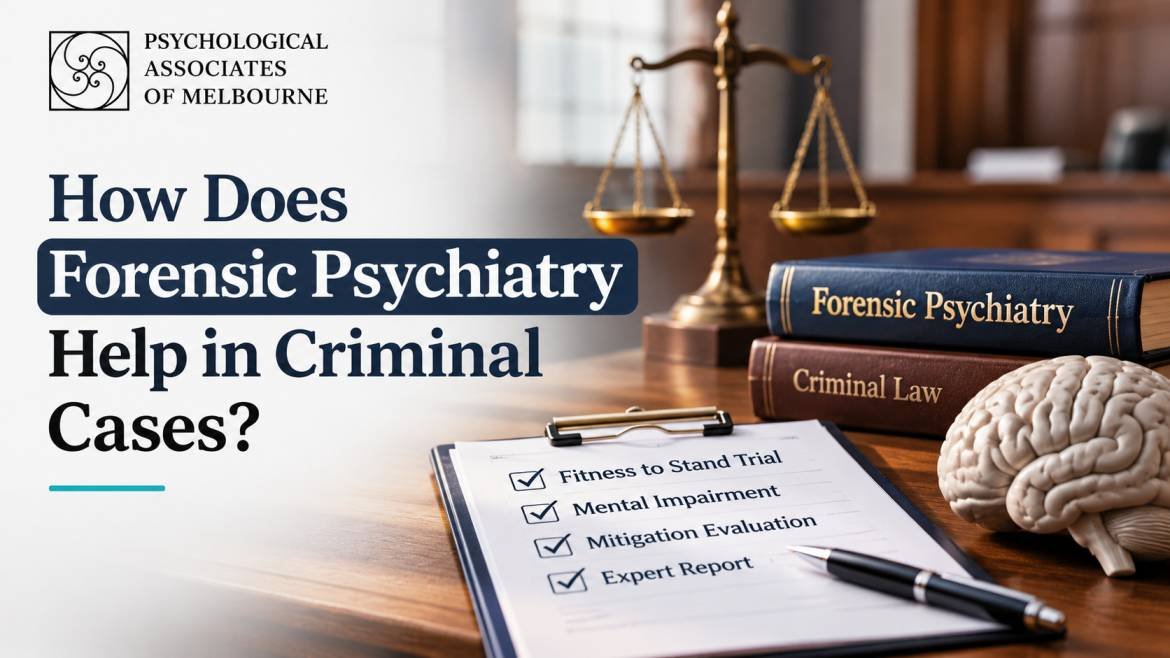
Forensic psychiatry helps in criminal cases by examining how a person’s mental health may relate to criminal proceedings, including their ability to participate in a trial, their mental state at the time of an alleged offense, and factors relevant to sentencing. Forensic experts provide independent assessments, written reports, and professional testimony to help courts understand complex mental health evidence.
In Melbourne and across Victoria, forensic psychological assessments can help legal professionals understand questions involving mental impairment, fitness to stand trial, and criminal mitigation. These assessments provide professional evidence, but the court makes the final legal decisions.
What Does a Forensic Expert Evaluate in Criminal Cases?
A forensic mental health expert evaluates specific psychological or psychiatric questions raised by a criminal case. The assessment depends on the legal issue, the available evidence, and the individual’s mental health history.
The main types of criminal evaluations include competency or fitness assessments, mental status evaluations, mitigation assessments, and diagnostic evaluations.
1. Fitness to Stand Trial
A fitness to stand trial assessment examines whether a person can understand and participate in criminal proceedings.
An expert may consider whether the individual can:
- Understand the nature of the charges.
- Follow what happens during court proceedings.
- Understand the possible consequences of the case.
- Communicate relevant information to their lawyer.
- Make decisions about their legal defense.
- Participate meaningfully in the proceedings.
A mental health diagnosis does not automatically mean someone is unfit to stand trial. The assessment focuses on the person’s actual mental functioning and the applicable legal criteria.
2. Mental Impairment at the Time of an Alleged Offence
A mental impairment evaluation examines a person’s mental functioning when the alleged offense occurred.
This is different from assessing their current mental health. An individual may experience significant psychiatric symptoms at one point and have a different mental state during a later assessment.
The evaluator may review:
- Previous psychiatric diagnoses.
- Medical and psychological records.
- Treatment and medication history.
- Available information about behavior around the time of the alleged offense.
- Relevant cognitive and psychological functioning.
- Information from appropriate collateral sources.
The purpose is to provide an evidence-based opinion about the person’s mental condition at the relevant time. The legal significance of that opinion depends on Victorian law and the specific circumstances of the case.
3. Criminal Mitigation Evaluations
A criminal mitigation evaluation examines psychological, psychiatric, and personal factors that may be relevant to sentencing.
The assessment may consider:
- Mental health history.
- Cognitive difficulties.
- Previous treatment and support.
- Relevant psychological conditions.
- Functional difficulties affecting everyday life.
- Treatment needs and recommendations.
For example, a person may have a documented history of serious mental health difficulties that provides important context for understanding their circumstances. An expert can assess the available evidence and explain relevant findings in a professional report.
A mitigation evaluation does not excuse criminal conduct or guarantee a reduced sentence. It provides information that may assist the court when considering the individual circumstances of a case.
4. Diagnostic Evaluations
Diagnostic evaluations examine mental health and neurocognitive conditions that may affect a person’s functioning in legal proceedings.
Depending on the referral question, an assessment may consider:
- Psychotic disorders.
- Mood disorders.
- Anxiety-related conditions.
- Cognitive impairment.
- Memory and attention difficulties.
- Other relevant psychiatric or psychological conditions.
The expert explains whether identified conditions have a meaningful connection to the legal question being examined. A diagnosis alone does not establish legal incapacity or criminal responsibility.
What Is the Difference Between Fitness to Stand Trial and Mental Impairment?
Fitness to stand trial and mental impairment are two separate legal questions under Victorian law.
| Feature | Fitness to stand trial | Mental impairment |
| Main focus | Present ability to participate in legal proceedings | Mental functioning at the time of the alleged offense |
| Assessment timeframe | Current functioning during proceedings | Historical mental state |
| Main purpose | Determine whether the person can participate in their defense | Examine whether the legal requirements for mental impairment may apply. |
| Relevant evidence | Current assessment, records, communication and cognitive functioning | Historical records, symptoms, behavior, and other relevant evidence |
| Legal significance | Whether the criminal proceeding can continue against the accused | Whether a mental impairment defence may apply |
Under the Crimes (Mental Impairment and Unfitness to be Tried) Act 1997 (Vic), these issues have distinct legal frameworks.
For example, someone might be fit to stand trial today but have experienced a significant mental impairment when the alleged offense occurred. The reverse situation can also arise.
Forensic assessments help clarify the relevant mental health evidence. They do not replace the court’s responsibility to apply the law.
What Is the Role of a Forensic Psychology Expert Witness?
A forensic psychology expert witness provides an independent professional opinion about psychological issues relevant to legal proceedings. Their role is to help courts and legal representatives understand psychological evidence that requires specialist knowledge.
A forensic psychology expert witness may be involved in criminal cases where questions arise about mental functioning, cognitive abilities, psychological conditions, or the impact of mental health on legal proceedings.
Conducting Independent Psychological Assessments
The expert examines the specific psychological questions raised by the legal matter.
Depending on the case, this may involve:
- Reviewing relevant psychological and medical history.
- Conducting clinical and forensic interviews.
- Assessing cognitive functioning.
- Considering appropriate psychological testing.
- Reviewing previous assessment findings.
- Examining information relevant to the alleged offense or current court proceedings.
The assessment should address the specific legal question rather than simply identify whether someone has a psychological condition.
Preparing Forensic Psychological Reports
A forensic psychological report presents the expert’s findings and professional opinions in a structured format.
A report may include:
- The reason for the assessment.
- The questions the expert was asked to address.
- Relevant background information.
- Assessment methods and procedures.
- Psychological findings.
- Professional interpretation.
- Limitations of the assessment.
- Opinions relevant to the legal questions.
A useful report explains how the expert reached their conclusions. It should distinguish observed information, reported history, documentary evidence, and professional interpretation.
Providing Expert Testimony in Court
A forensic psychology expert may be asked to explain their assessment and opinions during court proceedings.
This can involve:
- Explaining psychological terminology in understandable language.
- Describing the assessment methods used.
- Clarifying the meaning of psychological findings.
- Answering questions from legal representatives.
- Explaining limitations or disagreements in the available evidence.
An expert witness must provide objective evidence within their professional expertise. Their responsibility is to assist the court, not advocate for the person who requested or funded the assessment.
How Does a Forensic Psychological Assessment Work?
A forensic psychological assessment follows a structured process based on the legal questions that need to be answered. The exact procedures vary depending on the type of evaluation and the available information.
Step 1: Initial Referral and Legal Questions
The process begins by identifying why an assessment is needed.
A lawyer or another authorized requesting party may seek an evaluation to address questions involving fitness to stand trial, mental impairment, mitigation, or psychological functioning.
The expert needs to understand the specific questions before selecting appropriate assessment methods.
Step 2: Reviewing Relevant Records
The expert reviews available information that may help explain the person’s mental health and psychological functioning.
Depending on the case, this may include:
- Previous psychiatric and psychological reports.
- Medical records.
- Treatment history.
- Relevant medication records.
- Court documents.
- Information about behavior and functioning around the relevant period.
This review helps establish a background against which interview findings and assessment results can be considered.
Step 3: Conducting Interviews and Psychological Assessments
The expert conducts an assessment appropriate to the referral question.
Interviews may explore mental health history, current symptoms, cognitive functioning, personal circumstances, and relevant events.
Psychological tests may also be used when appropriate. The choice of assessment tools depends on the individual’s circumstances and the issue being investigated.
No single test can automatically establish fitness to stand trial or determine criminal responsibility.
Step 4: Analyzing the Findings
The expert considers the information gathered from interviews, records, observations, and relevant assessment methods.
They examine whether the findings support an opinion about the specific legal question.
For example, an assessment concerning current fitness focuses on present abilities, while an assessment concerning mental impairment requires consideration of the person’s mental functioning at the time of the alleged offense.
Step 5: Preparing the Forensic Report
The expert documents their findings and explains the reasoning behind their professional opinion.
A well-prepared report should make clear:
- What information was considered.
- Which assessment methods were used.
- What the findings indicate.
- How the findings relate to the referral questions.
- What limitations affect the conclusions.
Step 6: Providing Expert Testimony When Required
If the matter proceeds to a hearing or trial, the expert may be asked to explain the report and answer questions.
The court considers the expert evidence alongside the other available evidence. The expert does not control the final legal outcome.
How Can Forensic Psychological Evaluations Help During Sentencing?
Forensic psychological evaluations can help courts understand mental health and psychological factors that may be relevant when determining an appropriate sentence.
A mitigation evaluation provides information about an individual’s background, mental health, cognitive functioning, and relevant treatment needs.
For example, a person may have experienced a longstanding mental health condition that affected their daily functioning. A forensic assessment can examine the available records and explain the condition’s documented impact where relevant to sentencing.
The evaluation may address:
Mental health history: Previous diagnoses, symptoms, treatment, and relevant psychiatric history.
Cognitive functioning: Difficulties involving memory, attention, reasoning, or decision-making where these are relevant.
Psychological functioning: Emotional regulation, behavioral patterns, and other relevant psychological factors.
Treatment needs: Whether further mental health support or treatment may be appropriate.
Functional difficulties: How documented psychological or cognitive difficulties affect everyday activities and responsibilities.
A mitigation report does not determine guilt, remove legal responsibility, or guarantee a reduced sentence. It provides relevant professional information that the court may consider alongside the circumstances of the offense and other sentencing evidence.
When Might You Need a Forensic Psychology Expert Witness in Melbourne?
A forensic psychology expert witness in Melbourne may be relevant when a criminal proceeding raises questions requiring specialist psychological knowledge.
Legal representatives may consider seeking an independent assessment in situations involving:
- Questions about an accused person’s psychological functioning.
- Concerns about fitness to stand trial.
- Mental health evidence relevant to an alleged offense.
- Criminal mitigation and sentencing.
- Cognitive impairment affecting legal participation.
- Psychological evidence requiring independent professional interpretation.
The appropriate expert depends on the question being investigated. Some matters require psychiatric expertise, while others may require psychological assessment or input from more than one professional discipline.
What Should Legal Professionals Look for When Choosing a Forensic Expert?
Selecting an appropriate forensic expert requires more than checking whether someone holds a psychology or psychiatry qualification.
Consider the following factors:
- Professional qualifications: Confirm the expert’s relevant qualifications and registration.
- Forensic experience: Look for experience conducting assessments for legal proceedings.
- Relevant specialization: Ensure the expert has experience with the specific evaluation required.
- Report quality: The expert should explain their methods, findings, reasoning, and limitations.
- Professional independence: Their opinions should be based on evidence rather than the preferred outcome of the requesting party.
- Knowledge of Victorian law: The expert should understand the legal questions relevant to the assessment and work within their professional scope.
Psychological Associates of Melbourne states that it has completed more than 8,200 forensic assessments across criminal and civil cases. Its listed criminal services include competency evaluations, mitigation evaluations, mental status at the time of the offense evaluations, and diagnostic evaluations relevant to court-related questions.
The practice also describes providing expert consultations and professional testimony when required.
What Is the Difference Between Forensic Psychiatry and Forensic Psychology?
Forensic psychiatry and forensic psychology both apply mental health expertise to legal questions, but they involve different professional qualifications and areas of expertise.
| Area | Forensic psychiatry | Forensic psychology |
| Professional background | Medical doctor specializing in psychiatry | Psychologist with relevant forensic expertise |
| Main focus | Psychiatric conditions and medical aspects of mental health | Psychological functioning, cognition, and behavior |
| Assessment methods | Psychiatric interviews, medical history, and clinical assessment | Psychological interviews, testing, and behavioral assessment |
| Medical expertise | Includes medical diagnosis and medication-related expertise | Does not include medical prescribing authority |
| Legal involvement | Psychiatric opinions relevant to legal proceedings | Psychological opinions relevant to legal proceedings |
| Court participation | May provide expert reports and testimony | May provide expert reports and testimony |
Both professionals may contribute valuable evidence to criminal proceedings, depending on their qualifications, expertise, and the legal question.
For example, a forensic psychiatrist may examine whether a psychiatric condition affected someone’s mental functioning, while a forensic psychologist may assess relevant cognitive abilities and psychological functioning.
The two disciplines can complement each other, but they are not interchangeable. The appropriate expert should be selected according to the assessment required.
Common Misconceptions
Understanding forensic assessments requires distinguishing clinical findings from legal decisions.
A Mental Health Diagnosis Automatically Establishes Mental Impairment
This is incorrect. Having depression, bipolar disorder, schizophrenia, or another mental health condition does not automatically establish a defense of mental impairment.
The relevant question is how the person’s mental functioning related to the legal criteria at the time of the alleged offense.
Forensic Experts Decide Whether Someone Is Guilty
Forensic experts provide professional opinions about matters within their expertise. They do not determine guilt or innocence.
The court considers expert evidence alongside other evidence and applies the relevant law.
Every Person With a Mental Illness Is Unfit to Stand Trial
A mental health diagnosis does not automatically make someone unfit to stand trial.
The assessment examines whether the person’s mental processes prevent them from meeting the relevant legal requirements for participating in proceedings.
Forensic Assessments Are the Same as Regular Mental Health Treatment
They have different purposes.
Regular psychological or psychiatric treatment focuses on a person’s mental health and well-being. A forensic assessment addresses specific questions arising from a legal matter.
The forensic expert’s role is to provide an independent opinion rather than automatically establish an ongoing treatment relationship.
Expert Witness Opinions Guarantee a Particular Court Outcome
An expert report does not guarantee a successful defense, reduced sentence, or particular judicial decision.
The court considers the expert’s qualifications, assessment methods, reasoning, and evidence alongside the rest of the case.
Frequently Asked Questions
A forensic psychology expert witness provides independent psychological opinions relevant to legal proceedings. They may conduct assessments, review psychological records, prepare expert reports, and explain psychological findings in court.
Yes. A suitably qualified forensic psychologist may provide expert testimony in criminal proceedings when their specialist knowledge is relevant and the court permits the evidence. Their opinions must remain within their professional expertise.
A forensic psychological evaluation typically involves reviewing relevant records, conducting interviews, using appropriate assessment methods, analyzing findings, and preparing a professional report. The process depends on the legal question being investigated.
Fitness to stand trial is assessed by examining whether a person’s current mental functioning allows them to understand the charges and proceedings, follow the court process, and provide necessary instructions to their lawyer. The court determines fitness under the applicable legal framework.
Yes. Certain psychiatric conditions and cognitive impairments may affect a person’s ability to participate in legal proceedings or may be relevant to their mental state at the time of an alleged offense. Their legal significance depends on the evidence and applicable law.
Forensic psychiatry applies medical psychiatric expertise to legal questions, while forensic psychology applies psychological expertise to legal questions. Both disciplines can provide independent assessments and expert testimony.
A lawyer may consider requesting a forensic assessment when a criminal case raises questions about fitness to stand trial, mental impairment, psychological functioning, or factors relevant to sentencing. The appropriate professional depends on the specific legal question.
A forensic psychological report may include the reason for the assessment, relevant background information, assessment methods, findings, professional interpretation, limitations, and opinions addressing the legal questions raised.
Conclusion
Forensic psychiatry helps in criminal cases by examining how mental health conditions and psychological functioning relate to legal proceedings. Assessments involving fitness to stand trial, mental impairment, criminal mitigation, and diagnostic questions can provide important information to courts and legal professionals.
A forensic psychology expert witness can also help explain complex psychological findings through independent assessments, written reports, and professional testimony.
For legal professionals seeking forensic assessment services in Melbourne, understanding the specific legal question is the first step towards identifying the appropriate expert. Psychological Associates of Melbourne provides criminal forensic services, including competency evaluations, mitigation evaluations, mental status at the time of the offense evaluations, and diagnostic evaluations relevant to court-related matters.
Also Read:
Forensic Psychiatry Expert: What They Do and Why Their Opinion Matters
What Is a Forensic Service?