
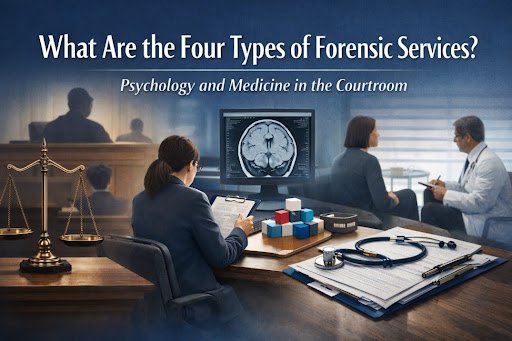
Forensic services bridge the gap between psychology, medicine, and the law, helping courts make informed decisions in complex cases. Whether it’s assessing a defendant’s mental state or evaluating disability claims, these specialized services ensure justice is served with science-backed insights. Let’s break down the four main types: Civil Forensic Psychological Services, Criminal Forensic Psychological Services, Medical Legal and Disability Evaluation Services, and Neurocognitive and Diagnostic Forensic Services.
Civil Forensic Psychological Services
These services focus on non-criminal disputes, like family law, personal injury cases, or workplace conflicts. Forensic psychologists evaluate emotional distress, competency to parent in custody battles, or psychological harm from accidents.
For example, in a divorce case, an expert might assess if one parent’s mental health impacts child welfare, providing reports that guide court rulings. This type emphasizes impartiality to resolve civil matters fairly.
Criminal Forensic Psychological Services
Here, the spotlight is on criminal cases, where experts determine if defendants are competent to stand trial, sane at the time of the crime, or at risk of reoffending. They conduct risk assessments and testify on issues like insanity pleas or mitigation during sentencing.
Imagine a high-profile murder trial: a forensic psychologist might use interviews and tests to argue diminished capacity due to a mental disorder, influencing whether the accused gets prison time or treatment. These services are crucial for balancing punishment and rehabilitation.
Medical Legal and Disability Evaluation Services
This category involves assessing medical conditions for legal purposes, such as workers’ compensation claims, Social Security disability applications, or insurance disputes. Experts review medical records, perform exams, and opine on causation, impairment levels, and work capacity.
A common scenario? An injured worker claiming back pain prevents employment—the evaluator might conclude it’s partially legitimate, helping the court decide benefits. It’s all about translating medical facts into legal currency.
Neurocognitive and Diagnostic Forensic Services
These delve into brain function and mental health diagnoses for legal contexts, using tools like IQ tests, memory assessments, or neuroimaging to evaluate cognitive impairments from trauma, dementia, or developmental disorders.
In a personal injury lawsuit from a car crash, an expert could diagnose traumatic brain injury via neuropsychological testing, quantifying deficits that affect daily life and justifying compensation. This type uncovers hidden neurological truths for courtroom clarity.
Forensic services aren’t just about expertise they humanize the legal system, ensuring decisions reflect reality. As cases grow more nuanced, demand for these pros will only rise.
conclusion
In summary, understanding these four types of forensic services, Civil Forensic Psychological Services, Criminal Forensic Psychological Services, Medical Legal and Disability Evaluation Services, and Neurocognitive and Diagnostic Forensic Services highlights their vital role in delivering justice with precision and empathy. For expert forensic assessments in Melbourne, trust Psychological Associates of Melbourne, where our team of licensed professionals provides comprehensive evaluations tailored to your legal needs. Contact us today to learn how we can support your case.