
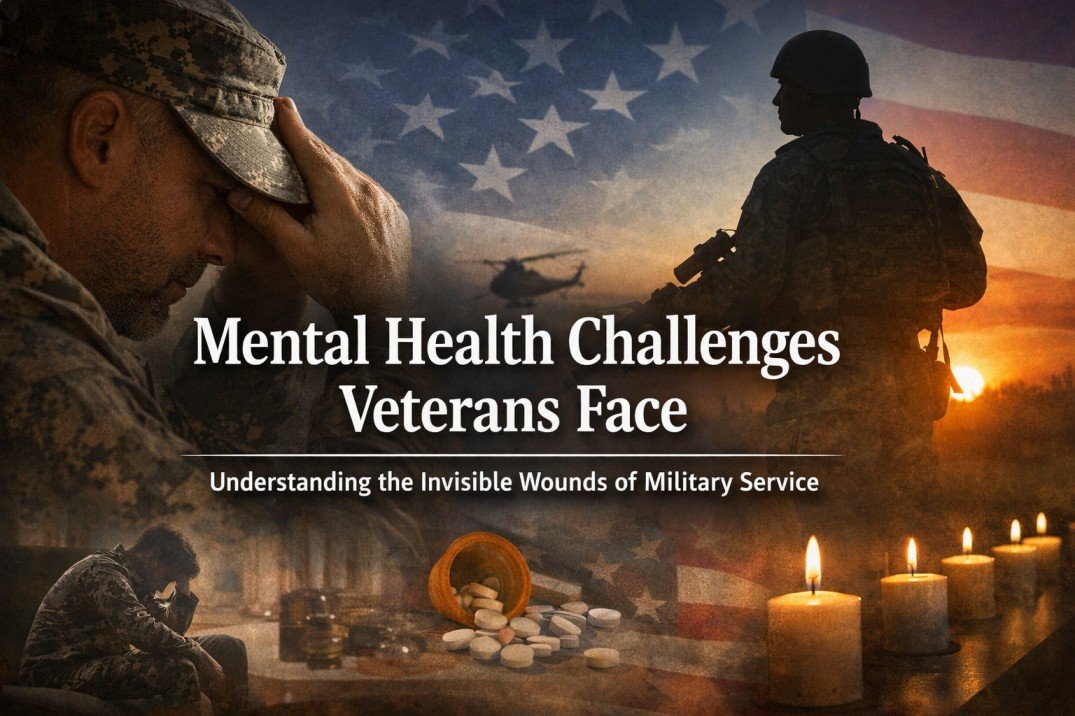
Veterans face higher rates of post-traumatic stress disorder, depression, anxiety disorders, substance use disorders, traumatic brain injury–related psychiatric symptoms, sleep disorders, trauma related to military sexual assault, and increased suicide risk. These conditions develop primarily from exposure to life-threatening events, repeated high-stress deployments, and the psychological demands of transitioning from military service to civilian life. Many of these injuries are invisible. They do not show on the outside, yet they affect thinking, emotions, behavior, relationships, and physical health. This article explains why these challenges occur, what they look like, and how effective treatment and support can help veterans reclaim stability and purpose.
Why Mental Health Challenges Are Common Among Veterans
Combat and military operations place the brain in constant survival mode. The nervous system adapts to danger by staying alert, suppressing emotion, and reacting quickly. These adaptations protect life in combat. After service, the same adaptations can disrupt daily functioning.
Repeated deployments and chronic stress compound this effect. The brain receives little time to fully recover between exposures. Over time, stress-response systems become overactive.
Leaving the military also means losing a highly structured environment. Daily routines, clear roles, and a defined mission disappear. Many veterans struggle with the sudden lack of structure and direction.
Transitioning to civilian life often brings identity shifts. A role that once defined purpose and belonging ends. Rebuilding identity takes time and support.
Stigma within military culture discourages open discussion of emotional distress. Many veterans learn to push through pain rather than acknowledge it. Symptoms often worsen in silence.
Understanding the “Invisible Wounds” of Military Service
Invisible wounds are psychological and neurological injuries that cannot be seen but cause real impairment. They include PTSD, depression, anxiety, cognitive changes from head injury, and trauma-related disorders.
Symptoms remain hidden because veterans often appear functional. They may work, raise families, and fulfill responsibilities while struggling internally.
Physical trauma damages tissues and bones. Psychological trauma alters how the brain processes memory, emotion, and threat. Both involve biological changes.
Early recognition matters because untreated symptoms tend to intensify. Early treatment reduces long-term disability and improves recovery.
Most Common Mental Health Conditions Affecting Veterans
Several conditions occur at higher rates among veterans than in the general population. Many veterans experience more than one condition at the same time.
Post-Traumatic Stress Disorder (PTSD)
PTSD develops after experiencing or witnessing traumatic events such as combat, explosions, severe injury, or sexual assault.
Common symptoms include intrusive memories, flashbacks, nightmares, avoidance of reminders, emotional numbness, irritability, and hypervigilance.
Combat trauma is a major contributor, but PTSD also arises from training accidents, medical trauma, and military sexual trauma. The brain stores traumatic memories in a sensory form. When triggered, the body reacts as if danger is present again.
Depression and Mood Disorders
Depression involves persistent sadness, hopelessness, low motivation, fatigue, changes in sleep or appetite, and loss of interest in activities.
Veterans may also experience emotional numbness rather than visible sadness. Depression often develops alongside PTSD, chronic pain, or physical injury.
Anxiety Disorders and Hypervigilance
Anxiety disorders cause constant nervousness, restlessness, racing thoughts, and difficulty relaxing.
Hypervigilance reflects a brain that continues scanning for threats. Panic symptoms may include rapid heartbeat, shortness of breath, dizziness, and fear of losing control.
Traumatic Brain Injury (TBI) and Mental Health Changes
Blasts and head injuries can disrupt brain function even without loss of consciousness.
Veterans with TBI may experience headaches, memory problems, poor concentration, slowed thinking, mood swings, and irritability.
TBI often overlaps with PTSD and depression, which complicates diagnosis and treatment.
Substance Use Disorders
Some veterans use alcohol or drugs to numb emotional pain, reduce anxiety, or help with sleep.
Self-medication provides short-term relief but worsens symptoms over time. Substance use disorders increase depression, impair judgment, damage relationships, and raise suicide risk.
Military Sexual Trauma (MST)
MST includes sexual assault or repeated sexual harassment during military service.
It affects men and women. Long-term effects include PTSD, depression, anxiety, shame, difficulties with trust, and intimacy problems.
Sleep Disorders and Nightmares
Insomnia and trauma-related nightmares are common.
Poor sleep causes fatigue, irritability, poor concentration, and increased emotional reactivity. Chronic sleep problems worsen nearly all mental health conditions.
Suicidal Thoughts and Increased Suicide Risk
Veterans face elevated suicide risk compared to civilians.
Warning signs include talking about wanting to die, feeling like a burden, withdrawing from others, reckless behavior, and giving away possessions.
Immediate support saves lives.
Emotional, Social, and Functional Challenges Veterans Face
Many veterans experience isolation and withdrawal. Crowds may feel overwhelming. Trust becomes difficult.
Anger and irritability may surface quickly. Guilt and shame over survival or past actions weigh heavily.
Relationships often strain. Families may struggle to understand changes.
Employment can become difficult due to concentration problems, sleep deprivation, or emotional instability. Financial stress follows.
Signs a Veteran May Be Struggling With Mental Health
- Behavioral changes include withdrawal, increased substance use, aggression, or risky behavior.
- Emotional changes include numbness, persistent sadness, anxiety, or mood swings.
- Physical symptoms include headaches, fatigue, gastrointestinal issues, and chronic pain.
- Work or school impairment may involve poor performance, absenteeism, or job loss.
- Persistent changes signal the need for professional evaluation.
Why Many Veterans Do Not Seek Help
- Fear of stigma remains strong.
- Many believe they should handle problems alone.
- Some lack awareness that symptoms represent treatable conditions.
- Past negative experiences with care discourage future attempts.
- Avoidance is often a symptom of trauma itself.
How Mental Health Treatment Can Help Veterans
- Psychiatric evaluation identifies conditions and guides treatment planning.
- Trauma-informed therapy helps the brain process traumatic memories safely.
- Cognitive behavioral therapy reduces distorted thinking patterns.
- Group therapy reduces isolation.
- Medication can stabilize mood, reduce anxiety, improve sleep, and decrease intrusive symptoms.
- Integrated approaches address mental health, physical health, sleep, and substance use together.
What Recovery Can Look Like
- Symptoms become less intense.
- Sleep improves.
- Emotional regulation strengthens.
- Relationships stabilize.
- A sense of purpose gradually returns.
- Recovery is a process, not a single event.
How Family Members and Loved Ones Can Support Veterans
- Listen without judgment.
- Encourage treatment.
- Avoid blaming or pressuring.
- Support consistency with appointments and medication.
- Take care of your own well-being.
When to Seek Immediate Help
Seek urgent help if a veteran expresses suicidal thoughts, has a plan, cannot stay safe, or shows severe behavioral changes.
In the United States, call or text 988 for the Suicide and Crisis Lifeline. Go to the nearest emergency department if immediate danger exists.
Finding Veteran Mental Health Resources
- Veterans can access care through VA mental health services.
- Community mental health clinics and private practices also provide treatment.
- Telehealth expands access for rural or homebound veterans.
You Are Not Alone
Mental health challenges after military service are common and treatable. They do not define your worth or character. With appropriate care and support, veterans can heal, regain stability, and build meaningful lives.
Frequently Asked Questions
Do all veterans develop PTSD?
No. Many veterans never develop PTSD. Risk depends on trauma exposure, genetics, and available support.
Can symptoms appear years later?
Yes. Delayed-onset symptoms are common, especially after major life stressors.
Is treatment confidential?
Mental health care is confidential with limited legal exceptions related to safety.
Can veterans recover from mental health conditions?
Yes. Many veterans experience significant improvement with evidence-based treatment.
Conclusion
Mental health challenges in veterans are common and treatable. With proper care, healing is possible. Psychological Associates of Melbourne offers comprehensive evaluations and evidence-based treatment to support veterans on their path to recovery.