
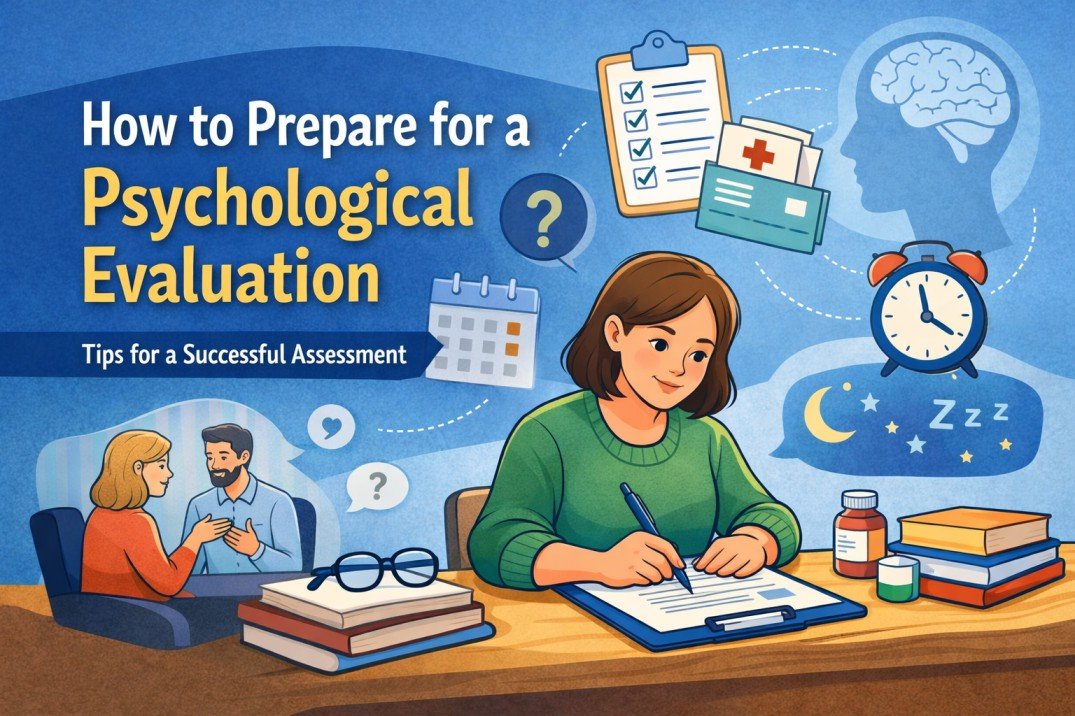
Prepare for a psychological evaluation by gathering relevant records, writing a clear timeline of your symptoms, completing intake forms, getting enough sleep, eating beforehand, wearing comfortable clothing, and answering questions honestly. Most evaluations last several hours, so plan your schedule, bring needed aids, and focus on giving accurate information rather than trying to perform well.
Quick Checklist to Prepare for a Psychological Evaluation
- Gather medical, school, and prior evaluation documents
- Write a timeline of symptoms and concerns
- Complete intake paperwork before the appointment
- Get a full night of sleep
- Eat before arriving
- Wear comfortable, layered clothing
- Bring glasses, hearing aids, or supports
- Plan for several hours of testing
What Is a Psychological Evaluation?
A psychological evaluation is a structured assessment conducted by a licensed psychologist to understand your thinking, learning, emotional functioning, and behavior. The process usually includes a clinical interview, standardized tests, rating scales, and behavioral observation. Results help clarify diagnoses, identify strengths and weaknesses, and guide recommendations.
Children, adolescents, and adults may need psychological evaluations. Schools request them for learning concerns. Adults seek testing for attention problems, memory concerns, anxiety, or workplace functioning. Clinicians also use evaluations to confirm diagnoses such as ADHD, autism, anxiety disorders, learning disorders, or mood conditions.
The purpose is accuracy. The psychologist gathers objective data and clinical information to understand how you function in real life.
Also Read: Veteran Benefit Evaluations Explained for Veterans
Why You Might Need a Psychological Evaluation
People seek psychological evaluations for many reasons. Learning difficulties such as reading or math struggles often require formal testing. ADHD or autism evaluations help clarify attention, executive functioning, and social communication patterns. Emotional concerns such as anxiety, depression, or behavioral changes may also prompt assessment.
Schools request evaluations when a student needs academic accommodations or special education services. Employers sometimes require evaluations for workplace accommodations. Courts may request evaluations for legal decisions involving custody, disability, or competency. Some people pursue testing simply to better understand their strengths and challenges.
Also Read: What is an online psychological evaluation
How to Prepare for a Psychological Evaluation
Gather Medical, School, and Previous Records
Collect documents that describe your history. Bring medical records, report cards, previous testing, and a list of medications. These materials help the psychologist understand long term patterns. For example, early reading delays combined with current comprehension issues may indicate a learning disorder. Without records, the clinician must rely only on current performance.
Also Read: What Is a Diagnostic Evaluation?
Write Down Your Symptoms and Concerns
Create a timeline of your concerns. Note when symptoms began, how often they occur, and how they affect daily life. Include behavior changes, academic struggles, memory issues, attention problems, or emotional changes. Also write your goals for the evaluation. You may want diagnostic clarification, school support, or treatment recommendations. Written notes help you provide clear and complete information.
Complete Intake Forms Before Appointment
Most practices send intake paperwork before testing. These forms ask about developmental history, education, medical background, and family history. Completing them ahead of time improves accuracy and allows the psychologist to select appropriate tests. It also prevents delays on testing day.
Prepare Your Personal and Family History
You will likely discuss developmental milestones, school performance, work history, and family mental health history. Think about early childhood learning, social functioning, and academic progress. This context helps interpret test results. For example, long standing attention issues differ from recent concentration problems caused by stress.
Get Enough Sleep Before Testing
Psychological testing measures attention, memory, and processing speed. Fatigue lowers performance and may produce misleading results. A full night of sleep improves consistency and accuracy.
Eat a Healthy Meal Before the Evaluation
Testing requires sustained concentration. Hunger affects attention and stamina. Eating beforehand helps maintain focus throughout the session.
Wear Comfortable Clothing
Evaluations often involve sitting, writing, and problem solving for extended periods. Offices may vary in temperature. Comfortable clothing reduces distraction and allows you to focus on tasks.
Bring Glasses, Hearing Aids, or Sensory Supports
Testing measures cognitive skills, not vision or hearing. Using your normal supports ensures results reflect your actual abilities.
Plan for a Long Appointment
Many evaluations last two to six hours. Some occur across multiple sessions. Plan your schedule so you do not feel rushed. Expect short breaks between testing blocks.
What to Bring to a Psychological Evaluation
Bring identification, referral paperwork if applicable, school records, medical records, previous evaluations, and a medication list. Bring notes describing symptoms or concerns. Parents may bring teacher feedback or work samples. For longer appointments, bring water or a snack if permitted.
What Happens During a Psychological Evaluation
The evaluation usually begins with an intake interview. The psychologist asks about your history, concerns, and goals. This conversation guides test selection.
You then complete standardized tests. These may include memory tasks, problem solving exercises, academic assessments, or questionnaires about emotions and behavior. Some tests are verbal. Others involve writing or computer tasks.
The psychologist also observes your behavior. Effort, pacing, frustration tolerance, and attention provide important clinical information.
After testing, the psychologist scores results and prepares a report. You typically return for a feedback session where findings and recommendations are explained.
What to Do During the Evaluation
Answer questions honestly. There are no right or wrong answers in most psychological measures. Honest responses lead to accurate interpretation.
Ask for breaks if you feel tired. Short breaks help maintain performance during long sessions.
Use your notes if needed. Referring to your timeline helps you provide accurate details.
Follow instructions carefully. If you do not understand a task, ask for clarification.
Do not try to study for the evaluation. Psychological tests measure natural functioning. Preparation does not improve scores and may distort results.
What Not to Do Before a Psychological Evaluation
Do not coach yourself or your child. Coaching alters responses and reduces validity.
Do not skip sleep. Fatigue lowers attention and memory.
Do not skip meals. Hunger affects concentration.
Do not rush to the appointment. Stress interferes with performance.
Do not hide symptoms. Incomplete information leads to incomplete conclusions.
How to Prepare a Child for a Psychological Evaluation
Explain the evaluation using simple language. Tell your child they will answer questions and do thinking activities. Avoid describing it as a test they must pass. Emphasize that the psychologist wants to understand how they learn.
Ensure your child sleeps well and eats beforehand. Bring comfort items if helpful. Encourage honest effort. Avoid practicing test questions. That interferes with accurate measurement.
Parents should bring school reports, teacher comments, and developmental history. These details help the psychologist understand functioning across settings.
How Long Does a Psychological Evaluation Take
Most psychological evaluations take two to six hours. Comprehensive assessments may require multiple sessions. The length depends on the referral question and type of testing. Cognitive, academic, and personality testing together require more time than brief screenings.
Common Concerns About Psychological Evaluations
Many people worry about being judged. Psychological evaluations focus on understanding, not judging.
Some worry about failing. You cannot fail a psychological evaluation. Results describe patterns of strengths and challenges.
Others ask about confidentiality. Reports remain confidential and are shared only with your permission except in limited legal situations.
People often ask whether they need to study. Studying is not helpful. Tests measure your natural functioning.
You may also worry about not knowing answers. Difficult items are expected. Performance across tasks provides useful information.
After the Psychological Evaluation What Happens Next
The psychologist scores tests and integrates interview data. A report is written summarizing findings. The report may include diagnoses, explanations, and recommendations.
You attend a feedback session. The psychologist explains results and answers questions. Recommendations may include therapy, academic support, accommodations, or further evaluation.
Tips to Reduce Anxiety Before Your Evaluation
Arrive early so you feel settled. Ask questions if you are unsure about the process. Bring water or snacks for longer sessions. Take breaks when needed. Focus on doing your best rather than trying to perform perfectly.
FAQ
Gather records, write a symptom timeline, complete intake forms, sleep well, eat beforehand, and answer questions honestly.
Bring identification, records, medication list, prior evaluations, and notes describing concerns.
No. Psychological testing measures natural functioning. Studying does not improve results and may distort accuracy.
Most evaluations take two to six hours. Some require multiple sessions depending on testing scope.
You complete interviews, standardized tests, questionnaires, and behavioral observations followed by a feedback session.
Yes. Notes about symptoms, timelines, and concerns help you provide accurate information.
Final Thoughts
Preparing for a psychological evaluation improves accuracy and helps the psychologist understand your concerns clearly. Bring relevant information, rest well, and answer honestly. The goal is not to perform but to provide an accurate picture of how you think, learn, and function. At Psychological Associates of Melbourne, psychological evaluations are designed to give clear, practical insights that guide meaningful recommendations and next steps.