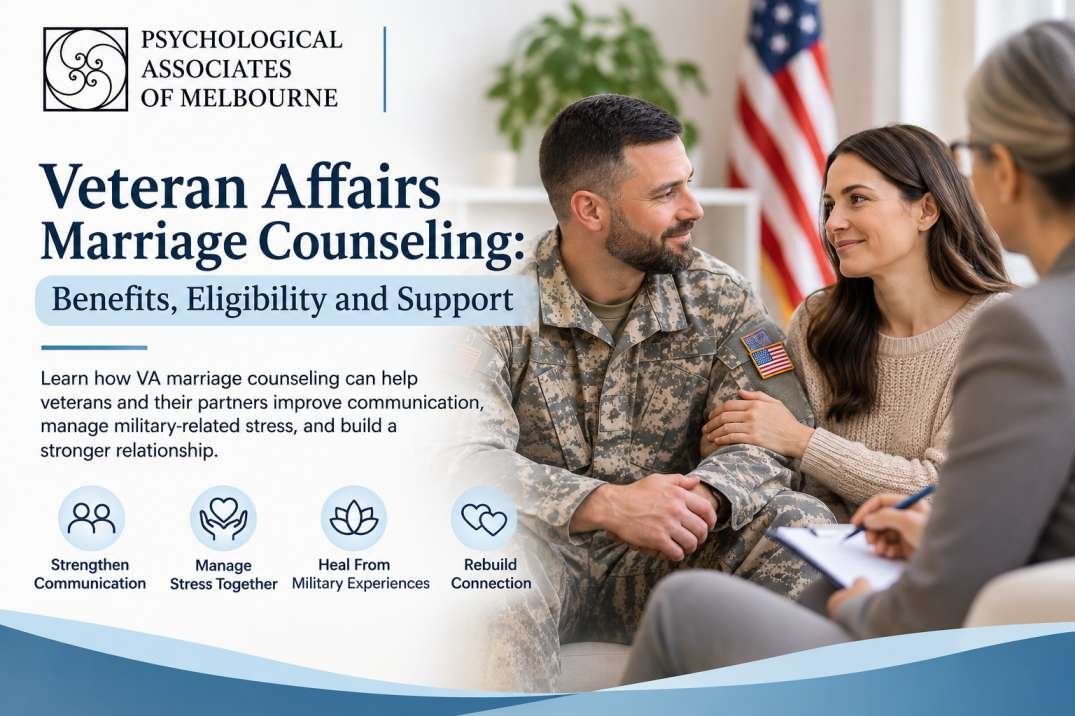
Veteran affairs marriage counseling helps eligible veterans, active-duty service members, and their families address relationship difficulties connected to military service. The U.S. Department of Veterans Affairs (VA) offers couples and family counseling through its Vet Center program. These services can help partners work through communication problems, emotional distance, deployment-related stress, and the challenges of adjusting to civilian life. Veterans therapy can also provide support for veterans managing military-related stress and its effects on their personal relationships.
Military service can affect family relationships in ways that are not always easy to explain. Long deployments, time away from loved ones, difficult experiences, and changes in daily responsibilities can create tension between partners. Marriage counseling gives couples an opportunity to discuss these concerns, understand each other’s experiences, and find healthier ways to manage relationship challenges. Through appropriate veterans therapy, individuals can also work on their emotional well-being while couples address concerns that affect their relationship.
Does the VA Offer Marriage Counseling?
Yes. The VA offers marriage and family counseling through its Vet Center program. These community-based centers provide readjustment counseling to eligible veterans, service members, and their families.
Counseling may help couples experiencing:
- Communication problems and frequent disagreements
- Emotional distance after deployment
- Stress related to military experiences
- Difficulties adjusting to civilian life
- Changes in family responsibilities
- Relationship concerns connected to trauma or grief
For example, a veteran returning home after a long deployment may need time to adjust to family life. Their spouse may also have developed different routines and responsibilities during the separation. Counseling can help both partners discuss these changes and understand each other’s needs.
The services available depend on eligibility and the individual Vet Center.
Who Qualifies for VA Marriage Counseling?
Not every veteran or family member automatically qualifies for Vet Center counseling. Eligibility depends on military service history and specific circumstances.
Veterans and service members may qualify based on factors such as:
- Service in a combat theater or area of hostility.
- Experience of military sexual trauma.
- Providing direct emergency medical care or mortuary services for war casualties.
- Certain military operations supporting combat activities.
- Participation in qualifying national emergency or major disaster responses.
- Specific National Guard and Reserve service circumstances.
Other circumstances may also qualify under VA rules. A Vet Center can review a person’s military history and explain the available services.
Can a Veteran’s Spouse Attend Counseling?
Yes. A spouse or partner may participate in couples or family counseling when their involvement supports the veteran’s or service member’s counseling goals.
This can be helpful when both partners are experiencing the effects of military service. For example, a veteran may find it difficult to talk about experiences after returning home. Their spouse may want to help but feel unsure about how to approach the subject.
A counselor can help both partners discuss their concerns and understand each other’s needs.
Participation in couples counseling does not automatically qualify every family member for separate individual counseling. The Vet Center determines which services are appropriate.
Do Veterans Need to Be Enrolled in VA Healthcare?
No. Eligible veterans do not need to be enrolled in VA healthcare or receive disability compensation to use Vet Center services. Vet Center eligibility is assessed separately from regular VA healthcare enrollment.
Is VA Marriage Counseling Free?
Yes. Eligible veterans and family members can receive Vet Center counseling at no cost.
Depending on eligibility and local availability, services may include individual counseling, couples counseling, family counseling, group support, readjustment counseling, and military sexual trauma counseling.
Private marriage counseling outside the Vet Center system is different. It is not automatically covered by VA benefits. Couples considering private counseling should ask the provider about session fees, insurance, and available payment arrangements.
How Can Military Service Affect a Marriage?
Military experiences can influence communication, emotional connection, and family responsibilities. Some couples adjust without major difficulties, while others need additional support.
Communication Problems
Partners may find it difficult to discuss feelings or resolve disagreements. One person may prefer to avoid difficult conversations, while the other may want to discuss every concern immediately.
These differences can lead to frustration. Counseling can help couples recognize their communication habits and find better ways to discuss sensitive topics.
Emotional Distance After Deployment
Deployment often requires families to manage long periods apart. When a veteran returns, both partners may need time to adjust to living together again.
Household responsibilities, daily routines, and relationship expectations may have changed. Counseling can help couples discuss these adjustments and rebuild their connection.
Stress After Leaving Military Service
Leaving the military can bring changes in employment, identity, daily routines, and social connections. A veteran may need time to adjust to civilian life, while their partner may also be adapting to new family responsibilities.
Marriage counseling gives couples an opportunity to discuss these changes and develop realistic expectations.
PTSD and Relationship Difficulties
Post-traumatic stress disorder (PTSD) can affect sleep, concentration, emotions, and reactions to stressful situations. Some veterans experience nightmares, irritability, emotional withdrawal, or increased alertness.
These symptoms can sometimes affect relationships. A spouse may feel confused by changes in communication or emotional availability.
Couples counseling can help partners understand how trauma-related symptoms affect their relationship. A veteran may also need individual treatment for PTSD. Relationship counseling does not replace an appropriate mental health assessment or individual treatment.
What Counseling Approaches Can Help Veteran Couples?
The right counseling approach depends on the couple’s concerns and goals.
Gottman Method: This approach focuses on communication, emotional connection, and managing disagreements. It helps couples recognize relationship patterns that may be creating tension.
Cognitive Behavioral Approaches: These techniques help people understand how thoughts, emotions, and actions influence their responses during difficult situations.
Trauma-Informed Counseling: This approach considers how difficult experiences can affect trust, communication, and emotional responses.
Some couples may benefit from individual mental health treatment alongside marriage counseling. A qualified counselor can help determine which approach is appropriate for their circumstances.
Where Can Veterans Find Marriage Counseling in Melbourne, Florida?
Veterans and eligible family members in Melbourne and the surrounding Brevard County area can explore local counseling options.
The Melbourne Vet Center provides couples and family counseling for eligible veterans and their families. Veterans can contact the center to ask about eligibility, appointments, and available services.
Psychological Associates of Melbourne
Mailing Address: 200 North Palm Avenue, Indialantic, Florida 32903-9998, USA
Phone: 321-541-1250
Email: administration@psychmelbourne.com
Fax: 855-803-3438
When contacting a provider, ask about experience with veterans, availability of couples sessions, appointment formats, and fees. Confirm that the specific service you need is offered before scheduling.
How to Find the Right Marriage Counselor
Choosing a counselor is an important decision, especially when military experiences are affecting a relationship.
Before scheduling an appointment, consider asking:
- Does the counselor have experience working with veterans and military families?
- Are couples counseling sessions available?
- Does the counselor understand trauma-related relationship concerns?
- Are in-person or video appointments available?
- What are the session fees and insurance arrangements?
- Can both partners participate in the counseling process?
These questions can help couples understand whether a provider’s services match their needs.
What If You Do Not Qualify for VA Marriage Counseling?
Veterans who do not meet Vet Center eligibility requirements can consider other sources of support.
Military OneSource: This Department of Defense program provides eligible military members and their families with confidential non-medical counseling and other support resources.
Private Marriage and Family Therapists: Licensed therapists can help couples work through communication problems, trust concerns, disagreements, and relationship changes. Look for a professional with experience supporting veterans and military families.
Community Mental Health Organizations: Some nonprofit and community organizations offer counseling, referrals, or reduced-cost services. Availability and fees depend on the organization.
Frequently Asked Questions
Yes. Eligible veterans and family members can receive couples and family counseling through Vet Centers at no cost. Private counseling outside the Vet Center system is not automatically covered.
Yes. A service-connected disability rating is not required for eligible Vet Center services. Eligibility depends on qualifying military service or circumstances.
Yes. A spouse or partner may participate when their involvement supports the veteran’s or service member’s counseling goals.
Vet Centers provide counseling for eligible individuals experiencing PTSD-related concerns and offer couples and family counseling. A counselor can discuss whether joint sessions, individual treatment, or additional support are appropriate.
Some vet centers offer phone or video appointments. Contact the local center to confirm whether remote couples counseling is available.
Conclusion
Military service can bring changes that affect both veterans and their families. When communication becomes difficult or partners struggle to adjust after deployment, marriage counseling can provide an opportunity to discuss those concerns and understand each other better.
The VA offers couples and family counseling through Vet Centers for eligible veterans, service members, and their families. These services are available at no cost, and veterans do not need to be enrolled in VA healthcare to qualify.
Veterans in Melbourne, Florida, can explore local counseling options through Psychological Associates of Melbourne and contact the practice to learn more about its available psychological services, counseling options, and appointment arrangements.