
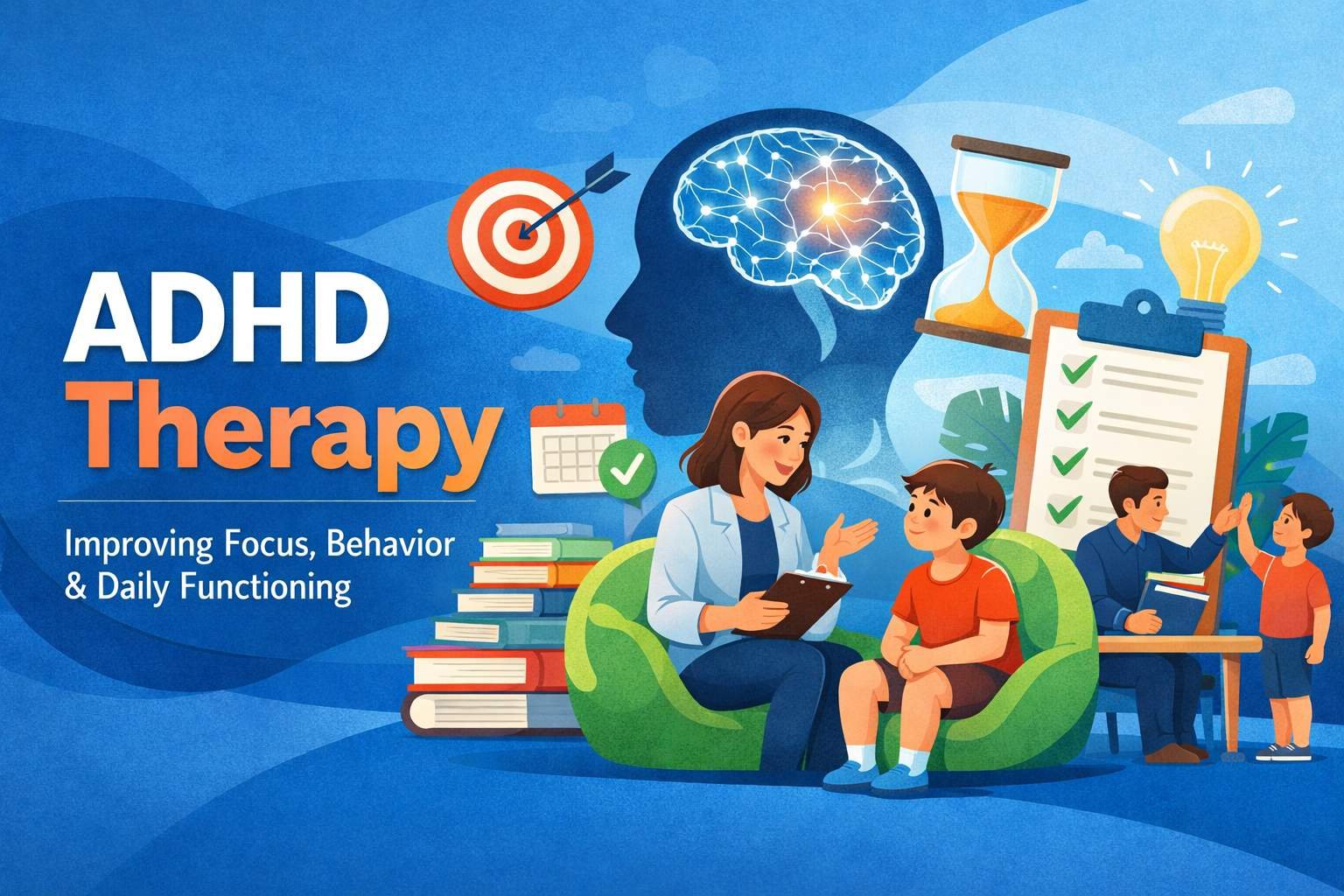
ADHD therapy focuses on building skills that reduce the impact of attention and executive functioning challenges. You learn how to plan tasks, reduce distractions, manage time, and regulate emotions. Therapy also addresses frustration and low confidence that often develop after repeated struggles.
Children usually work on routines and behavior with parent involvement. Adults focus on productivity, organization, and emotional control.
Also Read: Veteran Benefit Evaluations Explained for Veterans
Goals of ADHD Therapy
The goal of ADHD therapy is to improve how you function in daily life. Therapy helps you stay focused, complete tasks, and manage responsibilities more consistently. You learn organization skills, reduce impulsive reactions, and improve emotional regulation. These changes also support better communication and stronger relationships.
Also Read: Stress Management Therapy: How Therapy Helps You Reduce Stress and Build Resilience
How ADHD Therapy Works
ADHD therapy begins with understanding your challenges and setting clear goals. Sessions focus on learning practical strategies such as breaking tasks into steps, building routines, and reducing distractions. You practice these strategies between sessions and refine them over time.
For children, therapy often includes parents. For adults, therapy focuses on independent systems for planning and follow-through.
Also Read: What is an online psychological evaluation
Types of ADHD Therapy
Different types of ADHD therapy target behavior, thinking patterns, and executive functioning skills.
Behavioral Therapy
Behavioral therapy teaches structured routines and positive reinforcement to improve consistency. It helps you build daily habits, complete tasks more reliably, reduce impulsive behavior, and strengthen follow through by using clear systems and repetition.
Cognitive Behavioral Therapy (CBT)
Cognitive behavioral therapy helps you identify and change thinking patterns that interfere with action. It focuses on reducing procrastination, improving organization, strengthening emotional regulation, and helping you start and complete tasks more effectively.
Parent Training Therapy
Parent training helps caregivers guide behavior using consistent structure and expectations. It improves behavior consistency, creates predictable routines, reduces conflict at home, and supports children in practicing new skills regularly.
Social Skills Training
Social skills training improves how you communicate and interact with others. It helps you develop better listening skills, build stronger relationships, understand emotional cues, and reduce misunderstandings in social situations.
Occupational Therapy for ADHD
Occupational therapy supports organization and productivity in daily life. It helps you manage time more effectively, establish routines, reduce sensory overwhelm, and improve performance in school, work, or everyday tasks.
ADHD Coaching
ADHD coaching focuses on executive functioning skills such as planning and prioritizing. It helps you develop structured systems, stay accountable, improve decision making, and increase productivity in daily responsibilities.
Neurofeedback Therapy
Neurofeedback trains attention using real time brain activity feedback. It helps improve sustained attention, supports self regulation, enhances focus control, and encourages long term improvement in attention patterns.
ADHD Therapy for Children vs Adults
Children benefit from structure, routines, and behavior guidance. Parents often participate to reinforce skills. Adults focus on managing responsibilities, improving organization, and reducing procrastination. Therapy adapts to your needs and life demands.
What Happens in ADHD Therapy
Your therapist identifies your challenges and sets goals. Sessions focus on learning and practicing skills such as organization, emotional regulation, and planning. You apply these skills between sessions and review progress regularly.
Benefits of ADHD Therapy
ADHD therapy helps you stay organized, manage time, and complete tasks more reliably. Emotional regulation improves and impulsive reactions decrease. Relationships become more stable and confidence increases as daily functioning improves.
Does ADHD therapy work?
ADHD therapy improves executive functioning and behavior when practiced consistently. Behavioral therapy helps children build routines. Cognitive behavioral therapy helps adults manage procrastination and planning challenges. Many people benefit from combining therapy with medication.
FAQs
Behavioral therapy and cognitive behavioral therapy are the most commonly used approaches. The best option depends on your age and specific challenges.
Yes. Therapy alone can improve organization, focus, and emotional regulation. Some people also combine therapy with medication.
Many people notice improvements within a few weeks. Building consistent skills usually takes several months.
No. ADHD therapy helps both children and adults. Adults often use therapy to improve productivity and organization.
You learn practical strategies, practice skills, and apply them between sessions. Progress is reviewed regularly.
Conclusion
ADHD therapy helps you build practical skills to manage attention, organization, and impulsivity in everyday life. It focuses on improving how you plan tasks, regulate emotions, and follow through on responsibilities. Different therapy approaches target behavior, thinking patterns, and executive functioning, allowing treatment to match your specific needs. Many people benefit from combining therapy with medication, while others see meaningful progress with therapy alone.
At Psychological Associates of Melbourne, ADHD therapy is tailored to your challenges, goals, and daily demands. With structured support and consistent skill building, therapy can improve focus, strengthen relationships, and help you function more confidently in work, school, and everyday life.